News, Industry Consultation
Thailand’s Shift from Plastic to Sustainable Packaging
Plastic has long been widely used in retail, food, and consumer goods packaging because of its lightweight, durable, and cost-efficient properties.
However, when large-scale single-use consumption is not supported by effective collection, sorting, and recycling systems, plastic convenience can create significant environmental pressure.
Thailand offers a practical example of how a plastic-dependent market is exploring packaging reduction through policy measures, retail initiatives, material alternatives, and systematic packaging design.
Plastic Consumption and Waste Management Challenges
In 2018, Thailand used approximately 45 billion plastic bags, equivalent to around eight bags per person per day. Fresh markets, grocery stores, department stores, and convenience stores were among the main consumption channels.
High consumption was not matched by equally effective recycling. According to the World Bank, Thailand’s recycling rate for major plastic resins—including PET, LDPE, HDPE, and PP—was only 17.6% in 2018.
The country also generates approximately 428,000 tonnes of mismanaged plastic waste each year, some of which may enter rivers and marine environments through improper disposal and drainage systems.
These figures reveal a clear gap between material consumption, waste collection, sorting capacity, and actual recycling outcomes.
Policy Measures and Retail-Level Reduction
To reduce plastic waste, Thailand introduced the Roadmap on Plastic Waste Management 2018–2030, focusing on the reduction of selected single-use plastics, the promotion of alternative materials, and the circular use of plastic resources.
From January 1, 2020, major retailers, convenience stores, and selected commercial establishments stopped providing free single-use plastic bags.
Reduction measures were also extended to products such as:
- Thin plastic bags
- Foam food containers
- Disposable plastic cups
- Plastic straws
Thailand’s experience shows that plastic reduction cannot rely on consumers alone. Effective progress requires collaboration between policymakers, retailers, packaging manufacturers, consumers, and waste management systems.
Banana Leaf Packaging and Material Substitution
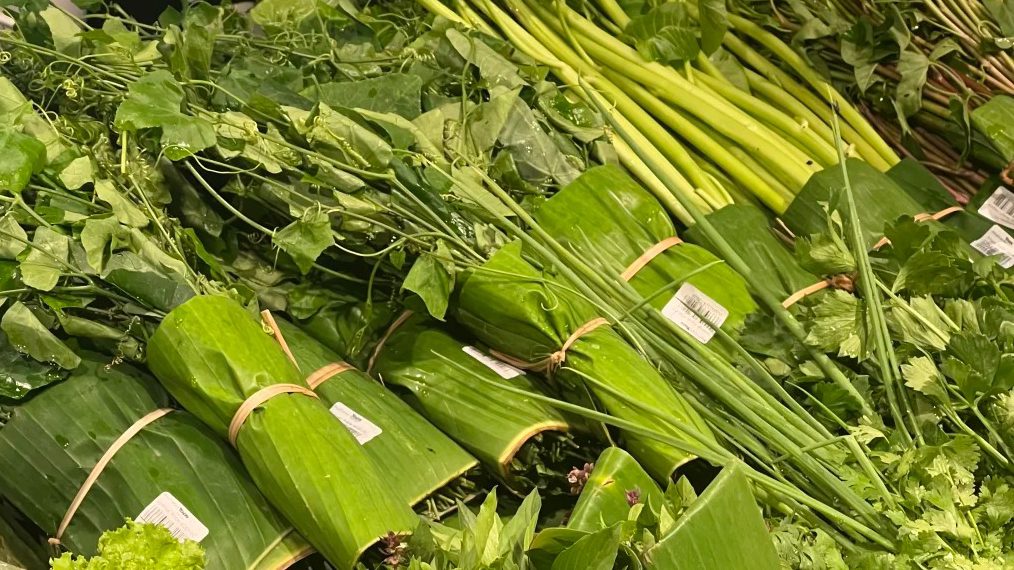
In 2019, Rimping Supermarket in Chiang Mai attracted international attention by using banana leaves to wrap selected fresh vegetables.
This initiative reduced the use of plastic trays and films in suitable fresh produce applications while making use of a locally available natural material.
However, banana leaves are mainly suitable for products with short retail cycles and limited protection requirements. They may not meet the needs of products requiring:
- Long-distance transportation
- Moisture and contamination protection
- Reliable sealing
- Extended shelf life
The value of this case is therefore not simply that natural materials can replace plastic.
Its broader lesson is that packaging materials should be selected according to the product, supply chain, distribution environment, functional requirements, and local waste management conditions.
From Material Replacement to Systematic Packaging Design
Sustainable packaging cannot be evaluated solely by whether it is made from paper, plant fibre, recycled plastic, or another alternative material.
A more practical approach should focus on four principles:
Reduce Material at the Source
Structural optimisation, lightweight design, and fewer unnecessary packaging layers can reduce resource use before waste is created.
Improve Recyclability
Mono-material structures, separable components, clear material identification, and compatibility with existing recycling systems can improve recovery efficiency.
Maintain Product Protection
Material reduction only creates real environmental value when packaging can still protect the product during transportation, storage, and use.
Provide Clear Disposal Guidance
Accurate material labels and recycling instructions can help consumers sort packaging correctly and increase the likelihood of effective recovery.
Thailand’s transition shows that truly sustainable packaging is not achieved by simply replacing one material with another.
It requires responsible material selection, structural optimisation, source reduction, effective product protection, and clearly defined end-of-life pathways. Only through this systematic approach can packaging reduce environmental impact while continuing to meet practical market needs.